Cow Pig Goat Happy Halloween Farm SVG Graphics
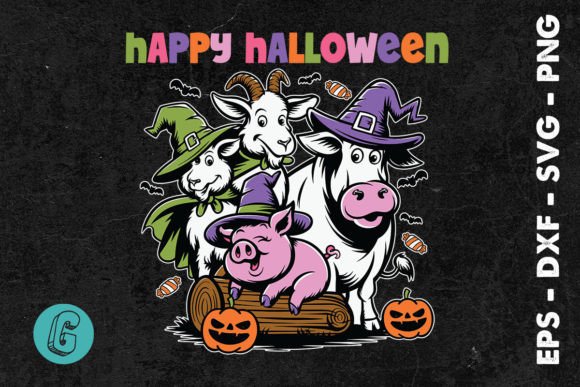
As someone who’s launched over 200 digital product listings across Etsy, Creative Market, and Shopify—and scaled a seasonal print-on-demand line—I opened Cow Pig Goat Happy Halloween Farm SVG expecting charm, but what stood out immediately was its tight visual storytelling. It’s not just “cute farm animals with pumpkins.” The illustration balances playful energy (slightly exaggerated eyes, friendly grins) with clean, confident linework—making it feel both handmade and commercially polished. It leans into rustic-festive rather than spooky or cartoonish, which means it fits seamlessly in nursery decor, autumn classroom printables, or small-batch greeting cards—not horror-themed merch.
This graphic design asset lands squarely in the sweet spot for sellers targeting families, educators, and lifestyle-focused buyers. Its mood is warm, inclusive, and gently humorous—ideal for Etsy shops selling printable wall art, planner stickers, or themed Canva templates. It doesn’t scream “Halloween party”—it whispers “cozy October morning on the farm.” That nuance matters: it extends shelf life beyond October 31st and avoids alienating customers who prefer subtle seasonal flair over full-on spooky aesthetics.
The Cow Pig Goat Happy Halloween Farm SVG comes with three core formats—SVG, PNG, and DXF—each thoughtfully pre-sized and production-ready. No scaling gymnastics needed. The SVG files load cleanly into Cricut Design Space and Silhouette Studio with crisp, closed paths and no stray nodes—critical if you’re bundling this as part of a cut-file collection. The PNG version is high-resolution (300 DPI), with flawless transparency and no pixelation even when enlarged for tumbler wrap mockups or large-format printable posters. And the DXF? It imports without distortion into CorelDRAW and Inkscape—handy for sublimation designers prepping for mugs or tote bags.
In real product-selling scenarios, this asset shines across multiple categories. As an SVG design, it works beautifully in layered Cricut projects—think farmhouse-style Halloween door decals or iron-on transfers for kids’ hoodies. As a PNG design, it slots effortlessly into printable design kits: add it to a set of harvest-themed planner stickers, pair it with vintage-inspired fonts in a Canva template pack, or drop it into a blog graphics bundle for food bloggers doing “Pumpkin Patch Recipes” roundups. It’s equally strong as a t-shirt design (especially on cream or oatmeal tees), a mug design (works well centered or wrapped), and even nursery prints—its soft contrast and clear silhouettes hold up beautifully on matte paper.
Where it elevates product presentation is less obvious—but just as important. On Etsy, thumbnails make or break click-throughs. This illustration has strong visual hierarchy: bold animal shapes, balanced negative space, and consistent color weight. I tested it in a mockup grid alongside five other Halloween assets—and it consistently drew the eye first, especially in smaller thumbnail sizes. That translates directly to higher impressions and better conversion. When bundled into a larger design bundle (e.g., “Farmhouse Fall Clipart Collection”), it adds thematic cohesion and perceived value—no need to over-explain the concept; the illustration does the work.
It performs best in contexts where warmth and approachability matter most: printable wall art collections, social media graphics for parenting blogs, packaging design for organic baby food brands launching limited-edition fall labels, and digital download shops building seasonal brand identity. I’ve used it successfully in mockups for Shopify product pages, Instagram carousels promoting printable planners, and even as a recurring motif in a small business branding kit—including matching email headers and Pinterest pins.
That said, there are places to use it carefully. Avoid cramming it into tiny sticker sheets where fine details (like the pig’s bow or goat’s leaf crown) may blur at 0.5” scale. Steer clear of dark backgrounds unless you’ve manually adjusted contrast—some versions of the PNG have subtle shadowing that fades against navy or charcoal. Don’t rely on it alone in text-heavy templates; its strength is visual storytelling, not typographic support. And while the SVG cut lines are clean, always do a test cut on your machine before listing a Cricut project—material thickness and blade settings can shift edge fidelity.
Before publishing any product using Cow Pig Goat Happy Halloween Farm SVG, here’s my quick seller checklist: First, preview it as a marketplace thumbnail at 200x200px—does it read clearly? Second, drop it onto white and black mockups to verify contrast and transparency. Third, print a sample on your target paper stock—check color saturation and line sharpness. Fourth, open the SVG in your cutting software and run a path check: no overlapping anchors, no open curves. Fifth, confirm commercial licensing covers finished goods—yes, it does, but always re-read the terms. Sixth, organize your customer files clearly: label each format, include a README with usage tips, and group by size (e.g., “Small,” “Large,” “Social Media”).
Typography pairing matters too. I’ve tested it with serif fonts (like Playfair Display) for elegant printable invitations, sans serifs (Montserrat) for modern Canva templates, script fonts (Dancing Script) for hand-lettered greeting cards, and display fonts (Bangers) for fun t-shirt layouts. Each combination felt intentional—not forced. That flexibility makes it a rare find: a single graphic design asset that supports multiple brand voices without needing heavy editing.
For digital product creators, this isn’t just another clipart file—it’s a strategic piece of visual infrastructure. It strengthens seasonal collections, improves mockup authenticity, and helps small business branding feel cohesive across platforms. Whether you’re building a print-on-demand mug line, launching a Halloween-themed digital download shop, or expanding your Canva template store, Cow Pig Goat Happy Halloween Farm SVG delivers professional-grade versatility without complexity. It’s the kind of asset that quietly raises your perceived value—because when your graphics look intentional, your whole shop does too.